


The Walking Dead: Aftermath
Ares Interactive, Inc.
I went into The Walking Dead: Aftermath expecting a familiar licensed action game, but I found something more focused than a simple name attached to a combat loop. Its appeal comes from putting pressure on every decision: walkers close in, resources matter, and the fantasy of surviving in The Walking Dead universe depends as much on staying composed as it does on attacking. I would describe it as a game for players who enjoy tense, character-driven action rather than a relaxed experience that can be played on autopilot.
That distinction is important. This is not just a game about clearing enemies from a screen. The strongest moments come from managing danger before it becomes overwhelming, choosing when to push forward, and accepting that a seemingly safe situation can change quickly. I enjoyed that sense of uncertainty, although it also means the game can feel demanding when I want a short, completely carefree session.
Why the survival-focused action works
The central idea is easy to understand: fight through walker swarms, take the role of recognizable survivors, and try to stay alive in a world where mistakes carry weight. What makes the formula effective is the contrast between the scale of the threat and the limited time available to react. A single walker is manageable, but a group forces me to think about positioning, timing, and the route ahead instead of simply tapping through every encounter.
I found myself paying more attention to the shape of each situation than I normally do in a straightforward mobile action game. It is tempting to attack immediately, especially when the screen appears clear, but that can leave me poorly placed when more enemies arrive. A better habit is to look for an escape direction before committing to a fight. That small change makes the action feel more deliberate and is one of the first useful lessons I took from playing.
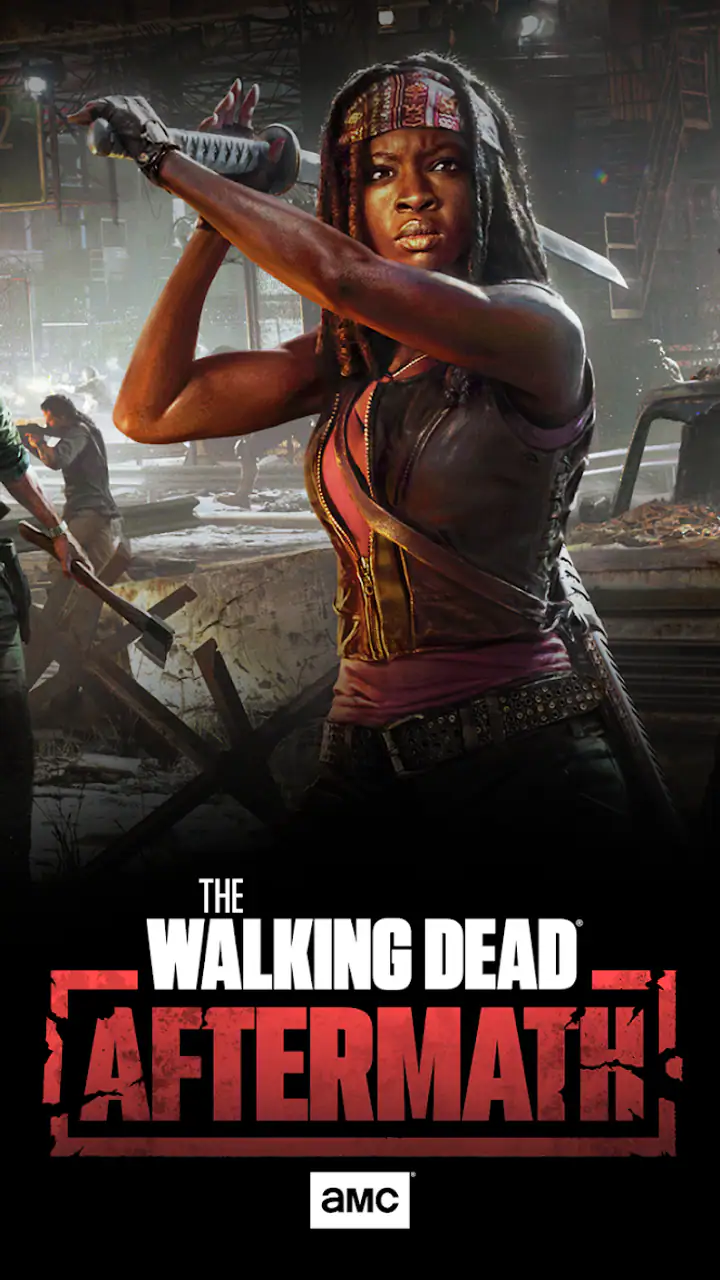
The survivor angle also gives the game a stronger identity than an anonymous zombie shooter. Leading familiar figures from the universe adds emotional context to the danger, even when the moment-to-moment play remains focused on action. I liked having a reason to care about who was on the screen rather than treating every character as a disposable tool. The setting feels more convincing when the game gives survival a personal face.
Related News

Why WhatsApp Messenger Still Makes Everyday Communication Feel Easy

Jurassic World: The Game Is the Better Dino Tycoon for Strategic Players

Threads in Real Life: Who Should Join, Lurk, or Leave

How SHEIN Turned Shopping Into an Endless Content Feed

How to Make Fortnite Feel Smarter on Mobile

Should You Switch to Microsoft Outlook on Mobile?
The best part is the constant trade-off between aggression and caution. Moving quickly can help me avoid being surrounded, but rushing can create a worse problem a few seconds later. Playing too carefully has its own cost because hesitation gives the walkers more time to gather. That balance keeps encounters from becoming completely predictable, and it rewards players who learn from failed attempts instead of repeating the same approach.
Small decisions matter more than fast reactions
Although the game belongs to the action category, I did not experience it as a pure reflex test. Fast reactions help, but they are not enough on their own. I had better results when I treated each encounter as a short planning exercise: identify the immediate threat, decide where I want to stand, and avoid allowing the crowd to control my movement. This makes the game accessible to players who enjoy tactical thinking but do not necessarily want a complex strategy title.
One practical approach is to resist the urge to use every available attack as soon as it becomes possible. Saving an option for the moment when the group compresses around the survivor can be more valuable than dealing a little extra damage early. I also recommend moving with the next few seconds in mind. If the safest space is behind the character, stepping forward without checking the surroundings can turn a successful attack into a trap.
Gallery
That advice becomes especially useful during short sessions. When I only have a few minutes, I can still play meaningfully by concentrating on one encounter and practicing better positioning. The game does not require every session to become a long commitment, but its tension is easier to appreciate when I give myself enough time to learn the rhythm rather than treating it as a disposable distraction.
What makes the Walking Dead setting useful here
Licensed games sometimes use a famous universe as decoration, with little connection between the setting and the mechanics. Here, the survival theme supports the action more naturally. Walker swarms make the world feel dangerous, while the survivor focus gives the conflict a human scale. I did not need a complicated explanation to understand the mood: every fight is about keeping people alive long enough to move through another dangerous situation.
The recognizable cast is also useful for players who already enjoy The Walking Dead. Their presence gives the campaign a familiar emotional starting point, while newcomers can still understand the basic objective without needing to know every detail of the broader universe. I would not use this game as a substitute for the television series or comics, but it does offer a playable way to spend time in that world rather than merely watching it.
For me, the setting works best when I stop expecting it to recreate every part of the franchise. Its job here is to frame the survival action, not to become a full role-playing interpretation of the entire universe. That narrower focus helps the game stay readable on a phone, though players looking for deep storytelling may find the action more satisfying than the narrative layer.
Where the experience becomes frustrating
The same pressure that makes the game exciting can also become its biggest weakness. When several threats arrive close together, a mistake can feel less like a dramatic consequence and more like a sudden loss of control. I sometimes knew what I should have done but could not recover quickly enough after one poor movement choice. Players who prefer generous checkpoints or forgiving combat may find that rhythm tiring.
Another limitation is the potential gap between a quick mobile session and the attention the game asks for. I can play on a break, but I do not always want to concentrate on spacing, threats, and timing while multitasking. This is not the best choice when I am looking for a background game that can be played while watching something else. Its strongest qualities depend on giving it at least a little mental focus.
The free entry point is welcome, but the presence of in-app purchases means I would approach progression with a clear personal budget. Individual purchases range from $0.49 to $499.99, which is a very wide spread. I would not recommend spending impulsively just because a difficult section creates pressure. The sensible approach is to play first, decide whether the core loop genuinely holds your attention, and only then consider whether optional spending improves your experience.
That pricing range is not automatically a reason to avoid the game, but it does change how I evaluate it. A free download can still become expensive if I treat every obstacle as a reason to buy something. I prefer to view purchases as a choice rather than part of the basic requirement for enjoying the action. Anyone uncomfortable with that model should be especially disciplined or choose a game with a simpler payment structure.
Useful habits for new survivors
My first recommendation is to learn from crowd shape instead of focusing on individual walkers. The nearest enemy is not always the most dangerous one. A larger group forming at an angle can cut off the route I planned to use, so I try to watch the whole space and preserve room to move. This is a more reliable habit than simply attacking whatever is closest.
Second, I would use early attempts as practice rather than judging the game immediately. The action becomes clearer once I understand how quickly a situation can deteriorate. A failed run can reveal that I entered an area from the wrong direction, spent an attack too soon, or ignored a safer path. That learning process is part of the appeal, but it also means the game may not feel instantly comfortable to someone who expects immediate mastery.
Third, I would separate progress goals from spending goals. If I am stuck, I first change my approach: move less predictably, avoid unnecessary fights, and think about where the next threat could come from. Only after that would I consider an in-app purchase. This keeps the game’s survival challenge intact and prevents a difficult moment from turning into an unplanned expense.
A fourth useful habit is to match the game to my mood. When I want tension, the pressure of a walker swarm is exactly what I am looking for. When I am tired, that same pressure can feel like work. I get more enjoyment by choosing it deliberately rather than opening it automatically whenever I have a spare minute.
How it compares with other mobile action games
Compared with a casual endless runner, this game asks for more attention and gives the setting a much stronger role. A runner is often about maintaining momentum and reacting to a repeating pattern, while this experience is more concerned with surviving confrontations and making sensible choices under pressure. I would choose the runner for a completely effortless session, but I would choose this one when I want the action to feel more dramatic.
It also differs from a traditional idle game, where much of the progress can happen without constant input. The Walking Dead: Aftermath is a poor fit if I want a game that advances while I am away. Its appeal is in being present during the danger. The satisfaction comes from handling the encounter myself, not from checking in later to collect progress.
Against more elaborate mobile role-playing games, its advantage is focus. I do not need to manage a huge collection of unrelated systems to understand why a fight matters. The trade-off is that players who enjoy extensive character building, long-term optimization, or a broad social structure may find this experience more limited. I would pick a deeper role-playing alternative when customization is my main priority, but this game is easier to approach when I want direct survival action in a familiar universe.
That makes its audience fairly clear. Fans of The Walking Dead should find the survivor theme immediately appealing, while action players who enjoy crowd management can appreciate the mechanics even without deep franchise knowledge. It is also a reasonable choice for someone who wants a free game to try before deciding whether the style suits them. I would skip it if I dislike pressure, dislike licensed settings, or want a low-attention game that never punishes hesitation.
Device expectations and long-term appeal
The game supports Android versions from 7.1 onward, so its stated operating-system requirement is not especially restrictive for many Android users. Still, compatibility alone does not tell me whether every phone will provide the same comfortable experience. Action games benefit from responsive controls and a display that makes incoming threats easy to read, so I would keep expectations realistic on an older or less responsive device.
The current version is 1.3.1, and I would keep the game updated through the normal store process when possible. Updates matter more in an action game than they might in a static offline title because small improvements can affect how reliable the overall experience feels. I would also make sure I have enough uninterrupted time before starting a serious session, since the game is more enjoyable when I can concentrate instead of repeatedly stopping and restarting.
Its audience size suggests that the concept has reached well beyond a tiny niche: the game has passed one million installs and holds a 4.7 average from around 41 thousand ratings. Those figures do not replace personal experience, but they do indicate that the combination of franchise familiarity and survival action has broad appeal. I would still treat the rating as a starting point, because players differ sharply in how much pressure and purchase choice they enjoy.
The game is free to play and carries a Teen content rating. That combination makes it easy to try, but I would not assume that “free” means frictionless for every player. Parents should consider whether the action and purchase model fit the player using the device. For adults, the main question is simpler: do you enjoy tense encounters enough to accept the learning curve and manage the optional spending responsibly?
My recommendation after playing
I recommend The Walking Dead: Aftermath to players who want action with a survival edge, especially fans who like seeing familiar survivors placed in situations where every decision feels urgent. Its strongest quality is not merely the number of walkers on screen. It is the way the threat encourages me to plan movement, preserve options, and think beyond the next attack.
I would recommend skipping it if your ideal mobile game is calm, highly forgiving, or almost entirely free of purchase pressure. I would also point players toward a more traditional role-playing game if they mainly want deep customization and long-term character management. This title is at its best when the immediate encounter is the priority.
Overall, I found it more engaging than a generic licensed action game because the survival theme affects how I play, not just what I see. The difficulty can test my patience, and the broad purchase range deserves careful handling, but those concerns do not erase the satisfying tension of controlling a survivor through a dangerous crowd. My final verdict is positive: try it for free, play patiently, avoid treating purchases as a solution to every setback, and decide whether its focused pressure matches the kind of action you want from your phone.
FAQs for The Walking Dead: Aftermath
What is The Walking Dead: Aftermath about?
The Walking Dead: Aftermath is a mobile survival game set in the world of the popular zombie franchise. You explore dangerous locations, search for useful supplies, complete missions, and try to survive encounters with walkers and other threats. The game focuses on action, resource management, and progressing through a post-apocalyptic story while improving your character and equipment.
Can I play The Walking Dead: Aftermath offline?
Offline availability may depend on the specific version and feature being used. Some single-player content may work without a constant connection after the necessary files have been downloaded, but online services, updates, advertisements, account features, and certain progression systems can require internet access. It is best to launch the game while connected before traveling or attempting to play without reliable mobile data.
Is The Walking Dead: Aftermath free to download and play?
The game may be available as a free download, but users should expect possible in-app purchases or optional paid items. These can include resources, upgrades, cosmetic content, or other conveniences that may speed up progression. Although spending is not always necessary to experience the main gameplay, players should review the store listing and purchase settings carefully, especially when children use the device.
What devices are compatible with The Walking Dead: Aftermath?
Compatibility depends on the operating system, device model, available storage, and the version distributed through the official app store. Because the game includes detailed environments, animations, and frequent content updates, older phones or tablets may experience longer loading times, reduced performance, or crashes. Check the current Android or iOS requirements and keep enough free storage for installation and updates.
Is The Walking Dead: Aftermath suitable for children?
The Walking Dead: Aftermath is generally aimed at older players because it contains zombie violence, frightening scenes, combat, and mature post-apocalyptic themes. The intensity can vary during missions, but the overall atmosphere is not designed for young children. Parents should check the official age rating, review the game's purchase and chat-related settings, and decide whether the content is appropriate for each player.
Pros
- Fast-paced combat feels satisfying on mobile devices.
- Varied weapons let you adapt to different enemy encounters.
- Dark environments create an effective survival-horror atmosphere.
- Short missions make it easy to play during brief sessions.
- Familiar Walking Dead elements appeal to fans of the franchise.
Cons
- Enemy behavior can feel predictable after repeated missions.
- Some areas are difficult to navigate without clear visual guidance.
- Weapon upgrades may require considerable time or resource grinding.
- The darker visuals can make details hard to see on small screens.
- Controls may feel cramped on phones during intense encounters.


